Woodland Heights Barely Has Any Businesses. That's Exactly Why The New Ones Matter.
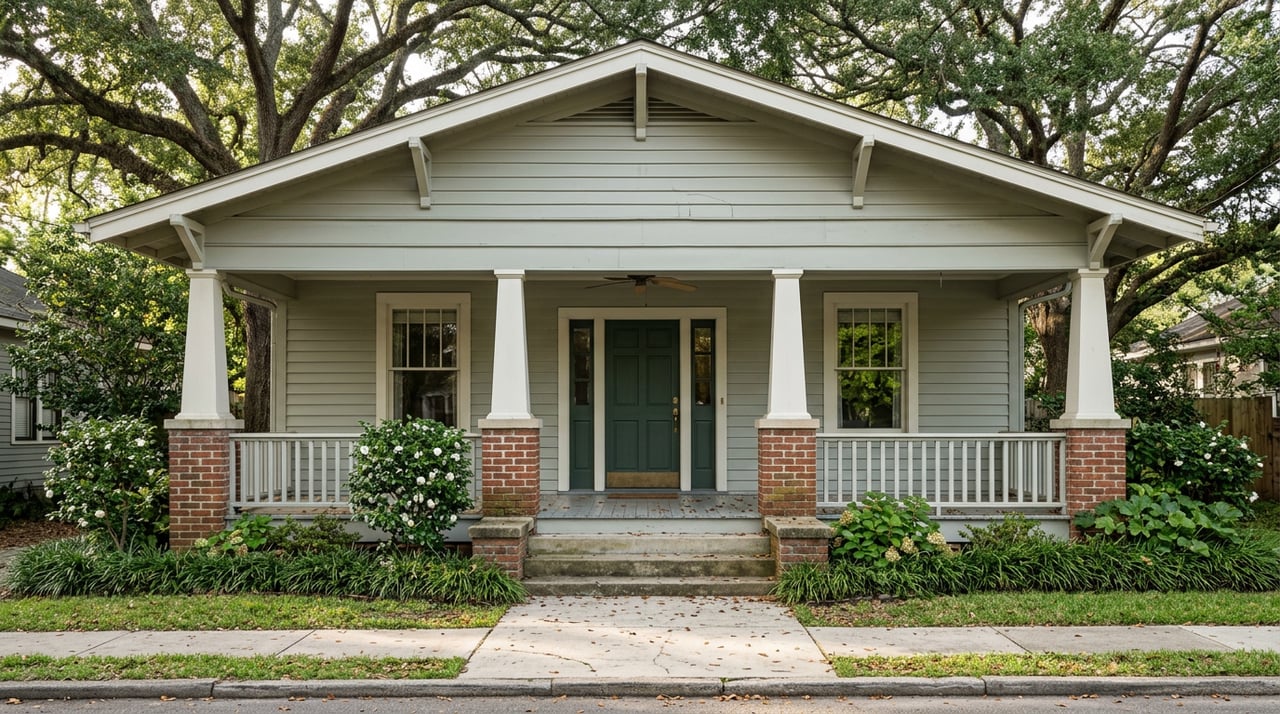
The building at Houston Avenue and Bayland sat as Uncle Beans for years, the kind of coffee shop you don't think about until it's gone. When it closed, there wasn't another option a block away to absorb the loss. There rarely is here. So when Carino's Coffee quietly reopened the same building this year with Mexican-inspired drinks like café con leche and horchata, the Woodland Heights Civic Association didn't bury the news in a newsletter footnote. They wrote it up like it mattered, because inside this neighborhood's actual boundary lines, it does.
That's the thing about Woodland Heights that doesn't show up on a map. The neighborhood is bounded by White Oak Bayou, Studemont and Studewood, 11th and Pecore, and I-45, a tight historic footprint of roughly 2,000 homes. Within those lines, there is almost no commercial real estate at all. The civic association says as much on its own site, noting plainly that there aren't many businesses actually inside the neighborhood's footprint. That scarcity changes what counts as news. A single coffee shop reopening or a barbershop moving into an old building isn't filler content here. It's most of the local commerce story for the year.
The honest tally of new business activity within Woodland Heights proper this year is short enough to list in full. Carino's Coffee took over the former Uncle Beans space at Houston Avenue and Bayland. And the building longtime residents still call the King Biscuit building, off White Oak Drive, was carved into new tenants including Cool Dog and a barbershop that's a sister location to East End Barber, offering haircuts and shaves.
That's close to the entire on-footprint retail turnover the civic association has flagged this year. Two buildings. A handful of storefronts. If you're used to neighborhoods where a new coffee concept opens every quarter, this will read as quiet. But quiet is the point. Every storefront change gets noticed here because there are so few of them to notice.
Ask a Woodland Heights resident where they actually go for a night out and most won't point inside the neighborhood at all. They'll point south, across Little White Oak Bayou, to the strip along Keene Street where White Oak Music Hall has anchored Houston's live music scene since 2016. Coverage of that strip splits on whether to call it Woodland Heights or the neighboring Near Northside, which tells you something on its own: the commercial energy people associate with living here is concentrated in a pocket where even reporters can't agree on the boundary line.
The clearest example is a bar most locals still call by its old name. Piper Hospitality Group opened Woodland Social there in 2024, a two-acre patio concept with brick-oven pizzas and enough turf and lawn games to function as a de facto backyard for people who don't have one. It didn't last a year under that name. Guests kept assuming it was located in The Woodlands, thirty miles north, so the ownership group renamed it White Oak Social in late 2025, added a playground, and rebuilt the menu around burgers, chicken tenders, and a weekend brunch aimed squarely at families rather than late-night crowds.
The renaming is a small story with a real lesson in it. The commercial identity people associate with Woodland Heights is being built by developers who aren't inside the neighborhood, aimed at a customer base that includes but isn't limited to the neighborhood, and marketed under names that keep needing correction because the geography is genuinely confusing. Marquette Companies, the developer behind the six-story Tempo at White Oak apartment building across Keene Street, has spent two years promising a 20,000-square-foot retail and restaurant block to sit alongside it. Early materials pointed to a 2025 opening. By the end of 2025, reporting on the project had already revised that to early 2026, with construction and leasing still working through the pipeline. As of the most recent updates available, that Keene Street retail block still doesn't have a confirmed opening date or an announced tenant roster.
None of this makes the White Oak District a bad bet for the area. Marquette's own development team has called it one of "the city's hottest destinations," and the music hall alone gives that claim some weight. But the pattern of slipping timelines is worth sitting with if you're a resident who keeps hearing that the neighborhood is about to get its retail moment. The moment keeps arriving a little later than announced. What's actually delivered and open right now is White Oak Social with its playground, H-Town Brewing, and the music hall itself, plus whatever the two coffee-and-barber storefronts inside Woodland Heights proper have managed on their own.
While the retail corridor takes its time, a different kind of change has moved faster than anyone planned for. The ongoing I-10 White Oak Bayou Elevation Project, combined with recurring emergency closures of the Houston Avenue bridge, has pushed a surge of cut-through traffic onto Woodland Heights' residential streets. The civic association has been blunt about the toll this is taking, flagging damage to the neighborhood's overhanging oak canopy and illegal truck traffic on streets that were never built for it.
This got serious enough that the association brought TxDOT and an HPD representative to its March 2026 members meeting, working with City Council Member Mario Castillo's office to compile a list of trouble spots for the state agency to address directly. If you live here and have noticed more trucks rattling down streets meant for two cars passing at walking speed, this is why. It isn't your imagination and it isn't random. It's a direct byproduct of infrastructure work happening at the neighborhood's edge, and it's the kind of friction that shows up in daily life long before it shows up in any market report.
None of this means Woodland Heights is thin on character, just thin on storefronts. The neighborhood's real infrastructure for daily life has always been outdoors and civic rather than retail. The Woodland Heights Civic Association's Director of Beautification maintains a specific set of green spaces that make up the neighborhood's actual public realm: the Norhill Esplanade, the Ley Plaza Pollinator Garden, the Watson Street Esplanade, and the Houston Avenue Esplanade. Woodland Park and Community Center, sitting along the bayou, is one of Houston's earliest parks, with walking paths, ball fields, and a public pool that looks out toward the downtown skyline.
The neighborhood's calendar runs on its own traditions rather than restaurant openings. This spring's Home Tour, themed "Crossing the Threshold," walked visitors through six historic homes including the "Original Wilson" house, a three-story American Foursquare built in 1910 by the neighborhood's founding developer and now a protected city landmark. Every December, the association closes fourteen blocks of two parallel streets for Lights in the Heights, lining them with luminaria for a night of hot drinks, live music, and carriage rides that draws visitors from across the city.
That's the actual rhythm of living here. A resident's year is built around the Home Tour in spring, Lights in the Heights in winter, walks along the bayou trail and the esplanades in between, and a short list south to White Oak Social or the music hall when they want a bigger night out. The commercial story inside the boundary lines stays small on purpose, or at least stays small because there's so little room inside a footprint this tight for anything else. When something does change, a coffee shop reopening, a barbershop moving in, it registers immediately precisely because the neighborhood has so few moving parts to track.
That scarcity is also why watching this market closely matters more than it would somewhere with a business turning over every month. If you're weighing what it actually costs to buy into a neighborhood this small, where inventory turns over about as rarely as the storefronts do, that's a conversation worth having with someone who tracks both sides of it. Truss Real Estate works Houston's inner loop neighborhoods with exactly this kind of detail in mind. Let's talk.
Stay up to date on the latest real estate trends.
September 3, 2026
August 27, 2026
August 27, 2026
August 20, 2026
August 13, 2026
August 13, 2026
You’ve got questions and we can’t wait to answer them.