Midtown Houston Can Feed You Dinner. Groceries Are Another Story.
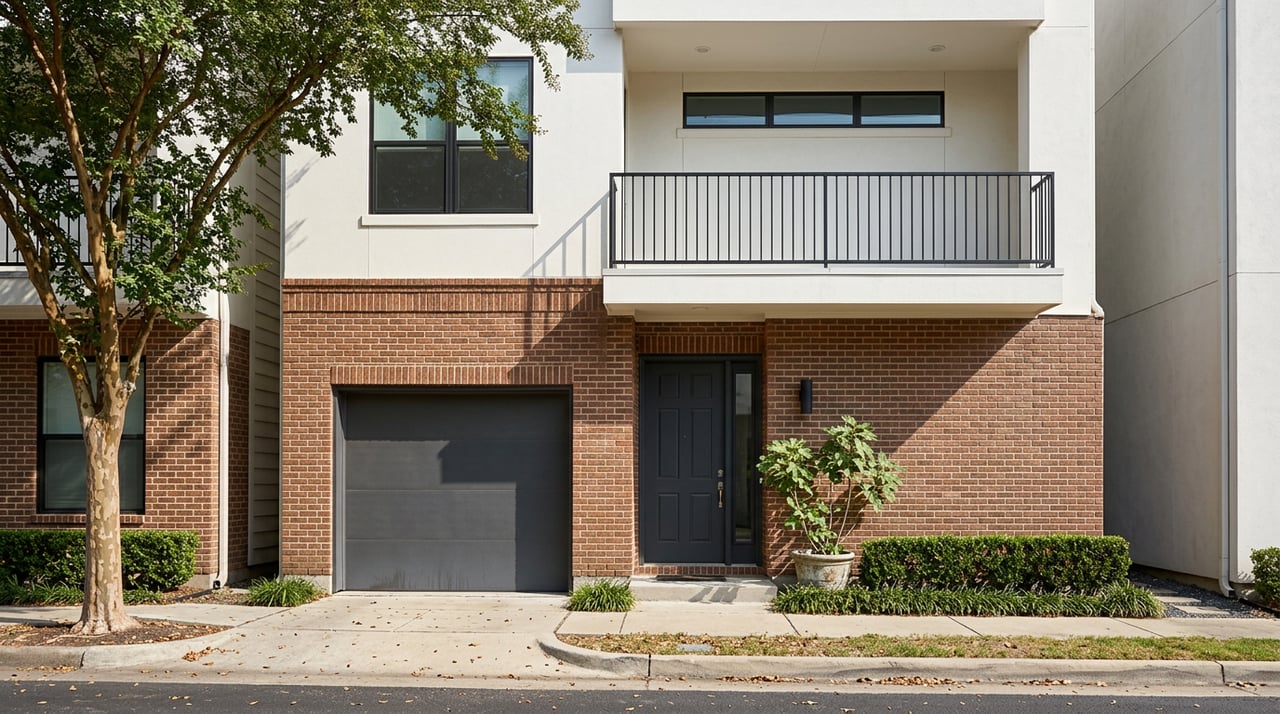
Ask anyone who lives inside the Midtown loop where they ate last week and you will get a list, not a struggle. Ask where they bought groceries and the answer gets shorter and more specific, usually involving one store and sometimes a grumble about parking.
That gap is not an accident of taste. It is the actual shape of the neighborhood right now, and once you see it, you notice it everywhere from the Mid Main sidewalks to the empty storefront on Elgin that everyone still calls "the old Whole Foods."
Midtown's dining scene has been on a run long enough that it stopped being news and started being the baseline. OpenTable counted 47 restaurants inside Midtown as of March 2026, a number that has almost certainly grown since, given how often new leases get signed in this stretch of the inner loop.
Some of that growth has real roots here. Home Slice Pizza, the Austin import, chose Midtown for its first Houston location back in 2022. Four years later the brand is expanding into the Heights, but Midtown was the test case, the neighborhood dense enough with foot traffic and apartment dwellers to prove the concept before it traveled anywhere else in the city.
That is the pattern worth noticing. Midtown is not simply absorbing restaurants the way a hungry market absorbs any available lease. It is functioning as a proving ground, the place operators pick first because the residential density already exists to support a new concept on day one.
Where restaurants go, fitness concepts tend to follow, and Midtown has been building out that layer just as steadily. F45 Training runs a studio at 2600 Travis Street, one of two Houston locations alongside its Rice Military outpost. Orangetheory has a presence in the district as well.
The more telling signal is Club Studio Fitness, the boutique arm of Fitness International, the company behind LA Fitness and Esporta. As of January 2026, Club Studio had a Midtown location in pre-sales, part of a national push to grow from 15 locations to 50 within the year. Fitness International tends to place these boutique studios inside markets where its bigger-box gyms already have a foothold and a proven membership base. Midtown made that list.
Put the restaurants and the studios next to each other and a picture starts to form: Midtown has become a place where the day-to-day infrastructure of eating out and working out is well capitalized. The neighborhood is investing in the parts of daily life that happen in public, at a table or on a gym floor, surrounded by other people.
The Midtown Redevelopment Authority owns and operates Bagby Park, a 30,000-square-foot green space at Gray and Bagby that opened in 2003 with a performance stage, a water feature, and a dog run built into the design. A few blocks over, Elizabeth Baldwin Park has stood since 1905, its original fountain and century-old oaks recently the subject of a $500,000 upgrade from the Midtown Redevelopment Authority, including a new playground and improved lighting.
Those two parks, along with Midtown Park and Glover Park, anchor a full calendar of free public programming. This summer's headline event was the Mid Main Summer Series, three Saturdays in June built around Houston's creative community and timed to the international soccer matches drawing crowds downtown. The closing night on June 27 turned Winbern Street into an Art Car showcase and cultural mixer, with a new Art Garden mural from the Insomniax Collective, a film installation from Camilo Gonzales, and DJ sets spanning three decades of music. The series also introduced Midtown's first Artist in Residence, a title that did not exist in this district a year ago.
None of that reads like a neighborhood coasting on nightlife alone. It reads like an organization with a budget for culture, spending it on programming that a resident would actually plan a Saturday around.
Here is where the story turns. Houston's retail market closed the second quarter of 2026 at 95.2% occupancy, according to a Weitzman report cited by Bisnow, a market so tight that brokers describe demand for existing space as some of the most competitive they have seen. And yet the former Whole Foods space at 515 Elgin Street, ground floor of the Pearl Marketplace apartment complex, has sat empty since the store closed in 2023, nearly three years now with no announced replacement.
Randalls is currently the only grocery store operating inside Midtown. Not the only good one, the only one.
A commercial real estate source working the Elgin listing put the problem plainly to Bisnow, saying the space has not attracted a national or regional grocer, ethnic grocers included, and explaining why in one line:
"In order to attract another grocery store, this submarket of Houston needs more residential."
That is not a comment about Midtown lacking appeal. It is a comment about sequencing. Grocers anchor to rooftops, meaning committed residential units within a tight radius, and Midtown's residential base, while growing, has not yet crossed the threshold that makes a second full-line grocery store pencil out. The restaurants and gyms scaled faster because they need less square footage and a smaller customer base to break even. A 45,000-square-foot grocery box needs thousands of nearby households eating dinner at home on a normal Tuesday, not just eating out on a Friday.
The neighborhood is not underbuilt. It is unevenly built, and the unevenness has a clear cause. Midtown's growth has been led by the kind of density that supports restaurants, boutique fitness, and public programming first, because those categories scale with foot traffic and modest footprints. Grocery infrastructure scales with rooftops, and that number is still catching up.
Practically, that means the current version of Midtown rewards residents who lean into what it does well. A Tuesday dinner is easier to solve with a short walk than a Sunday grocery haul. Bagby Park and Baldwin Park give you free, well-maintained public space without needing a car. The fitness options are dense enough that a short commute to a class is normal, not a compromise.
It also means the grocery gap is not permanent. As more residential product comes online in Midtown, the math the Elgin Street broker described starts to shift, and a second grocer becomes viable in a way it is not today. Watching that threshold get crossed, rather than watching another restaurant open, is probably the more useful thing to track if you want to understand where this neighborhood is actually headed.
For now, the honest read on Midtown is this: it feeds you well, keeps you moving, and gives you somewhere free to spend a Saturday. Stocking your own kitchen is still the one part of the routine that asks more of you than the neighborhood is built to give back, at least until the next wave of rooftops arrives.
If you are trying to make sense of what a neighborhood like Midtown actually offers day to day, or what its growth pattern means for property values down the line, that is exactly the kind of read Truss Real Estate specializes in. Let's Talk about what you're seeing on the ground and what it means for your next move in Houston.
Stay up to date on the latest real estate trends.
August 20, 2026
August 13, 2026
August 13, 2026
August 6, 2026
August 6, 2026
July 23, 2026
You’ve got questions and we can’t wait to answer them.